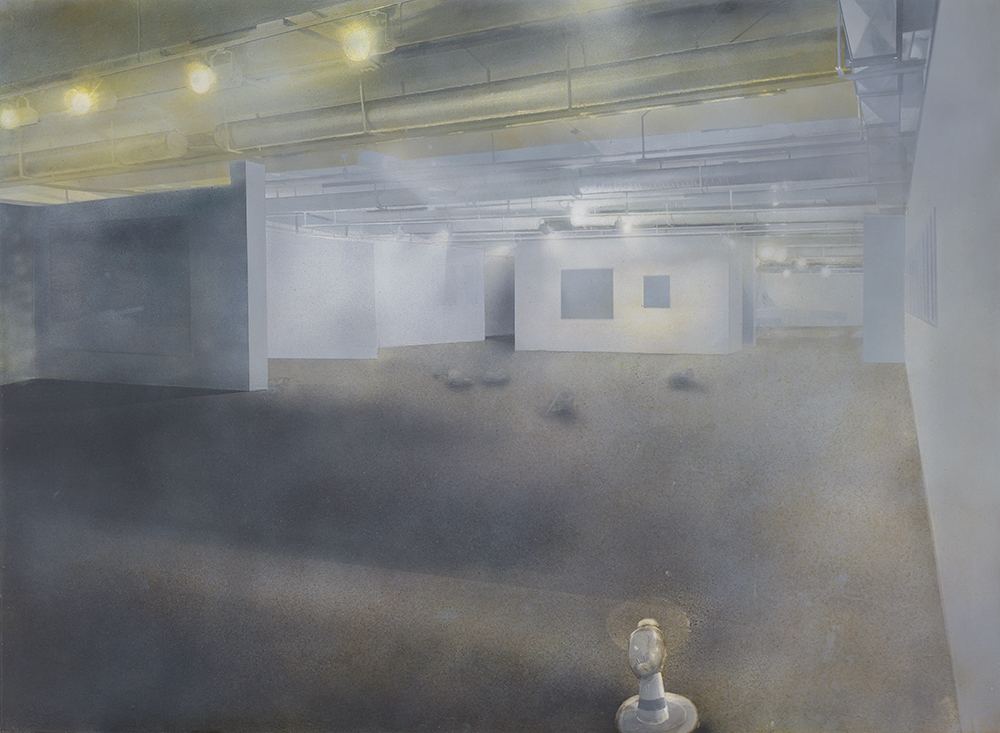
Art for Art's sake (series)
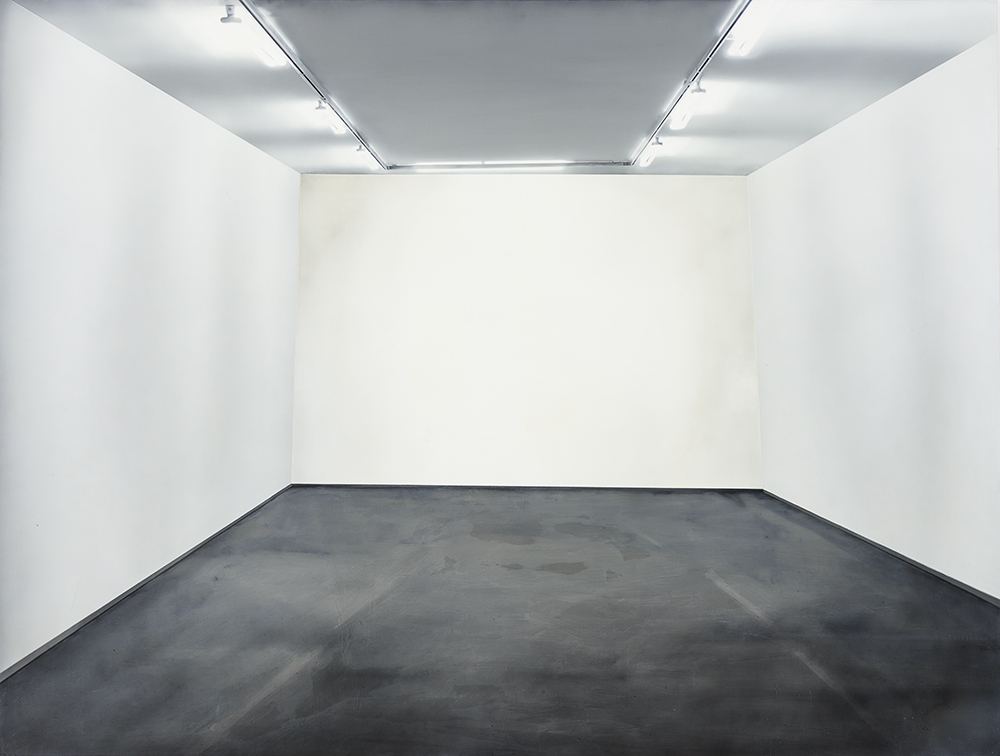
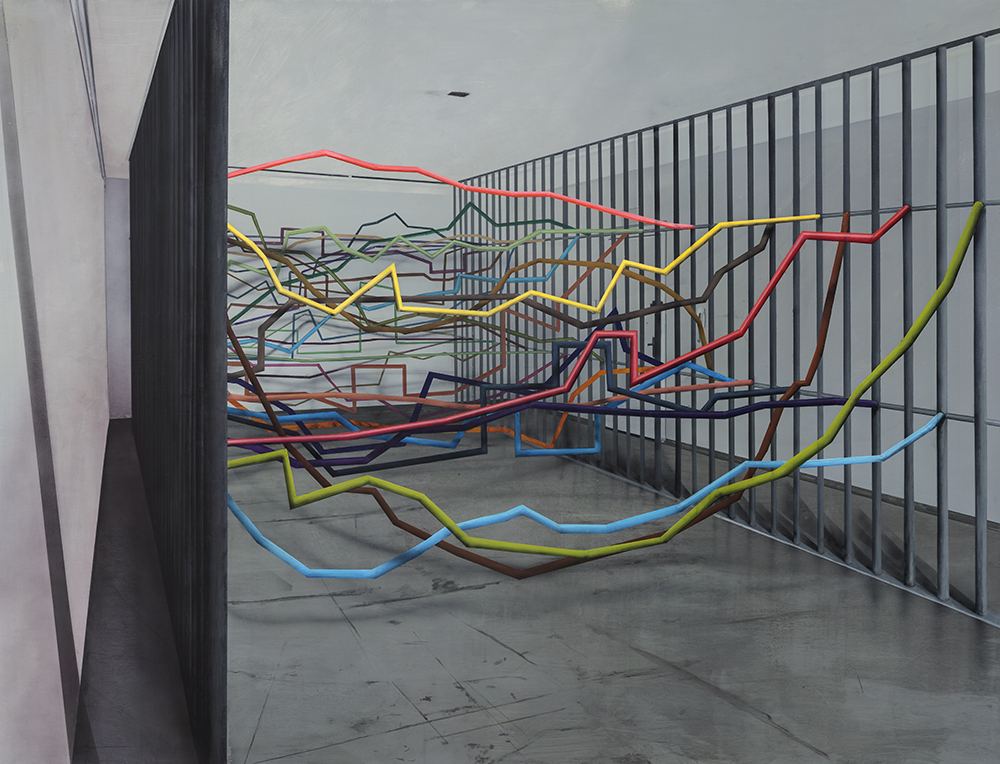
Chaos
This image shows a very technologically complex installation in which the effect of the curvature and changed angles could be achieved only through the demolition of the walls and rebuilding them. I do not think, however, that a work of this type, a very expensive exhibition, interesting though it is, would really make sense. All this just to get pretend chaos?
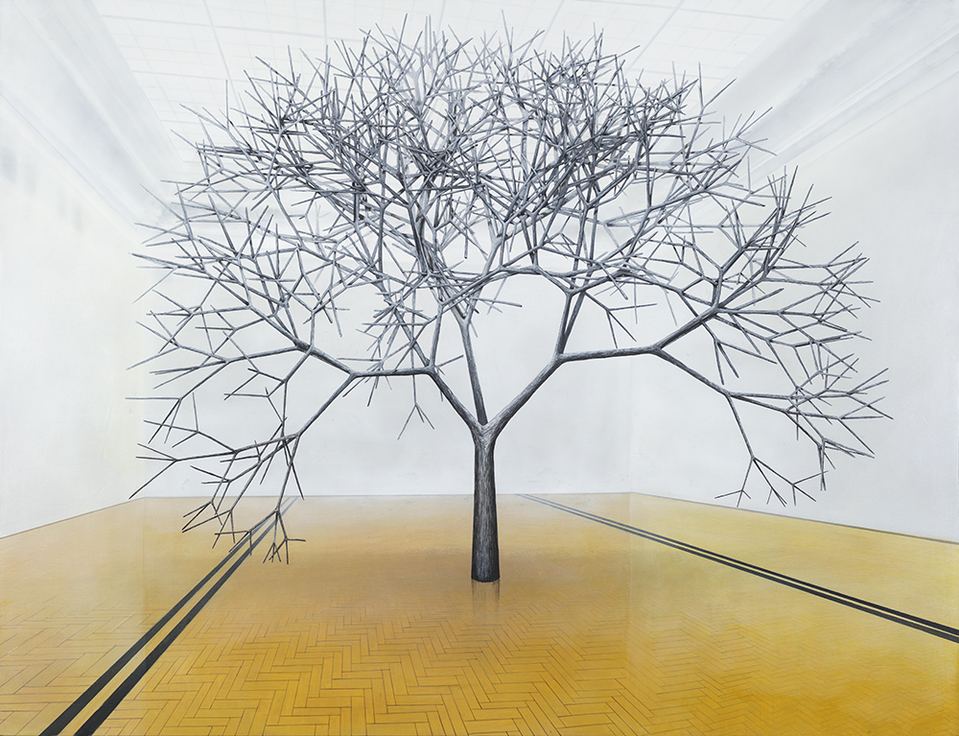
Fractal
The tree I painted in this image was created digitally, using a computer program that generates fractals. I found it fascinating that a mathematical structure, in spite of its order, may look biological and, at first glance, random, in nature. The Chaos is only superficial, however, because three branches grow from a bough, and these divide into another three, etc. Thus, each branch is repeated, and the tree is symmetrical, calculated according to a formula.
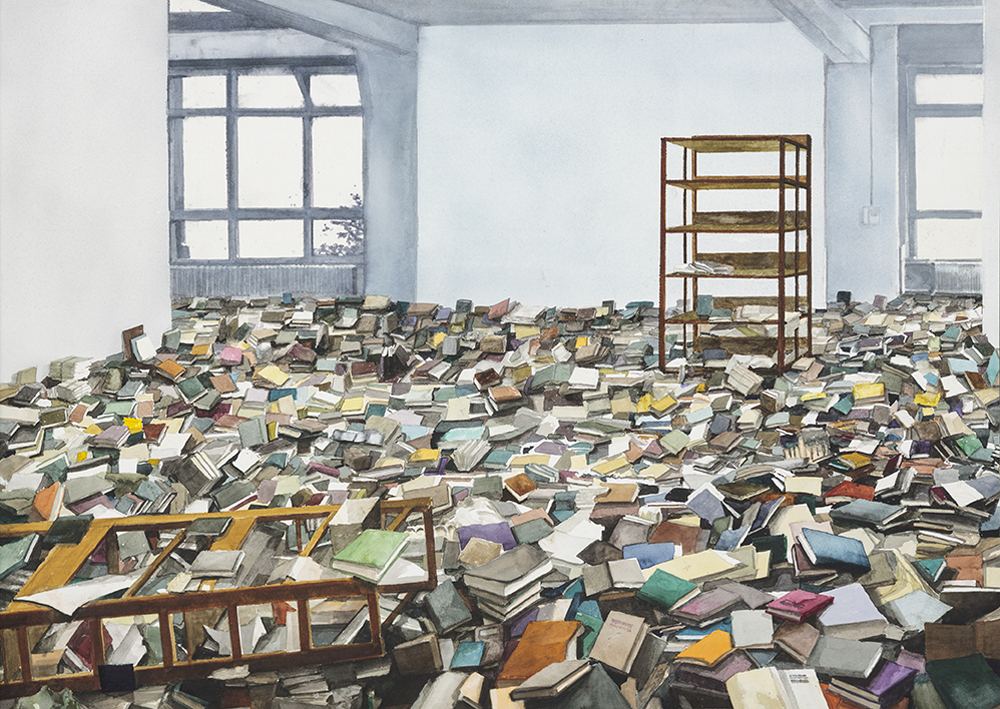
Library
I was inspired to create this image by a photo I found some time ago online. It presented the interior of a library, most likely after an earthquake. The books that had fallen from the shelves, randomly scattered on the floor, created a „carpet” that was difficult to cross. Difficult for two reasons: Firstly, it is difficult to wade through a metre-high pile of books, and secondly, who would dare to step on them?
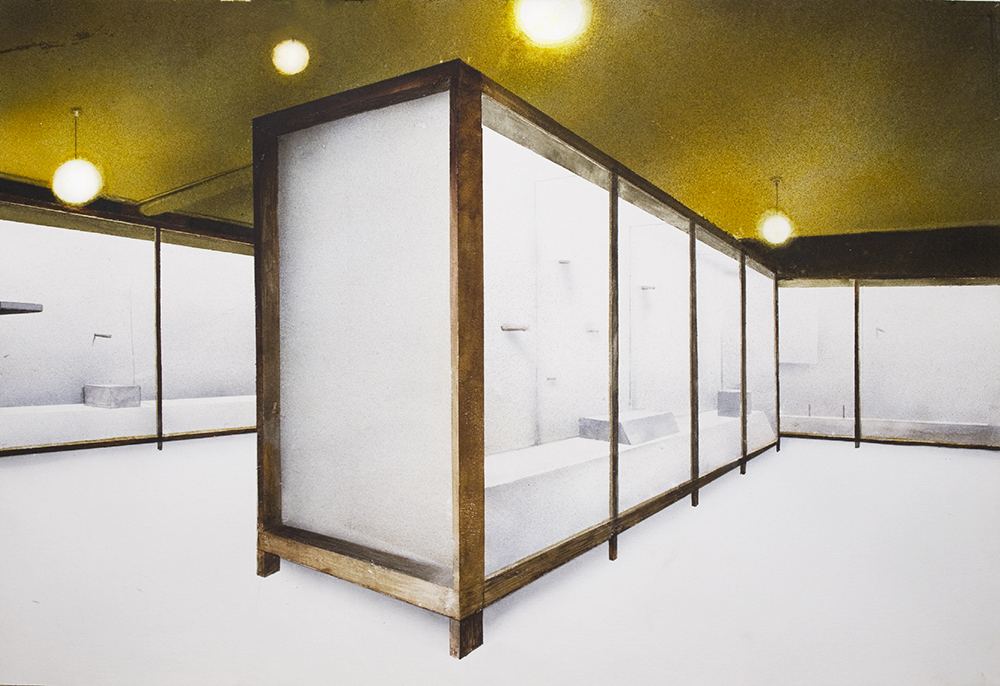
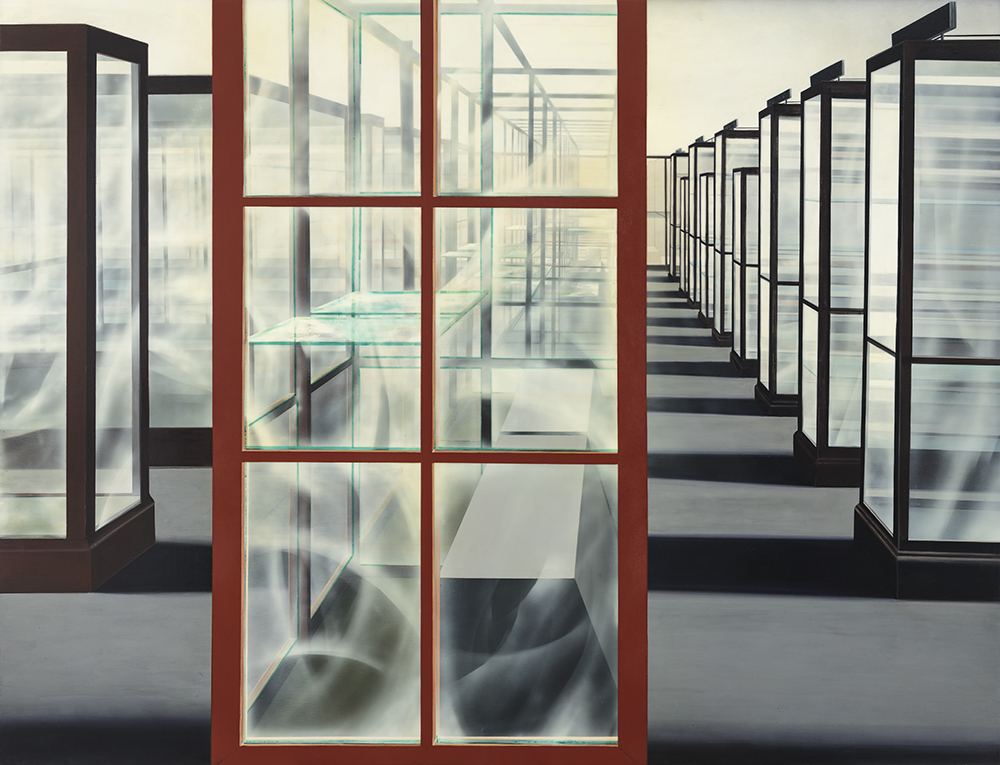
Museum of showcases
The idea for this image came to me when browsing a book on the history of the Natural History Museum in Wrocław. For me, most interesting things were the photos of the exhibition itself, and not the exhibits. The amazing layouts and shapes of the showcases instilled in me the idea of an exhibition at a museum devoid of museum objects.
Colleagues
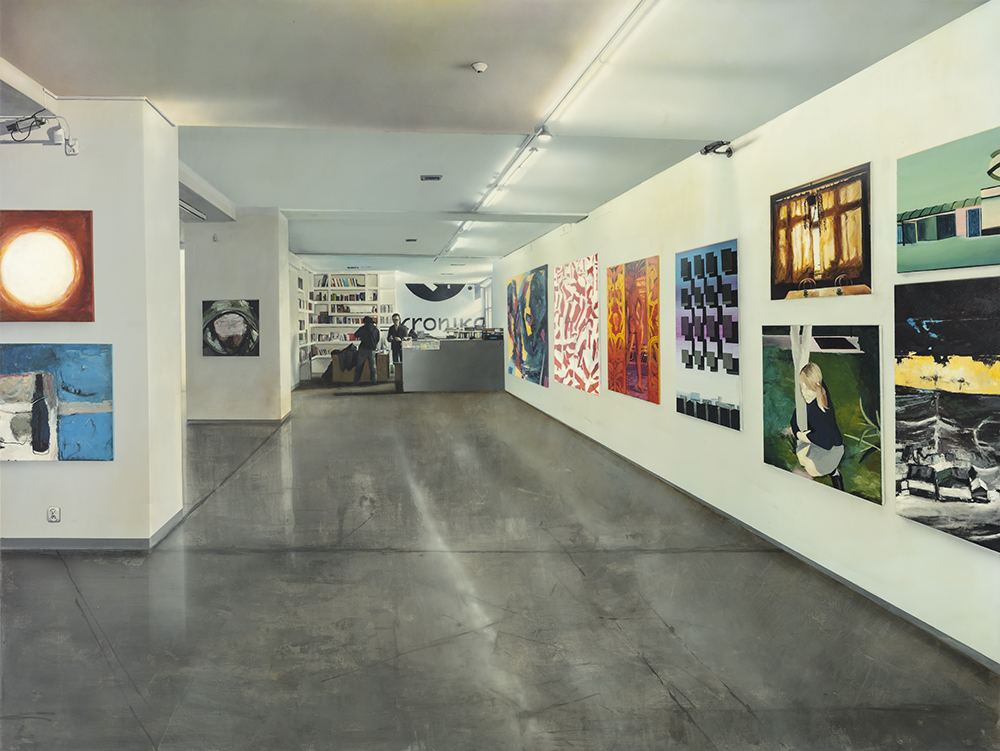
A few months ago, the curator Stanisław Ruksza told me about his idea for an exhibition representing academia in the Kronika Gallery, which he runs.
Since one of the most important elements of my life is, without a doubt, my work at the Academy of Fine Arts in Katowice, I had the idea to paint a scene which would consist of pictures of my friends and colleagues from work. And so I did.
From right to left: Dr. Jakub Adamek, Dr. Aleksander Kozyra, Krzysztof Rzeźniczek MA., Dr. Dominika Kowynia, Dr. Lesław Tetla, Prof. Kazimierz Cieślik, Prof. Ireneusz Walczak, Dr. Michał Minor, Dr. Jola Jastrząb, Prof. Zbigniew Blukacz and Prof. Janusz Karbowniczek.
Mr. Jan Kolano’s prison cell
Jan Kolano – prisoner, self-taught physicist who discovered his passion – hard science – behind bars.
His story inspired me so much that I decided to create an installation that used the material available on Jan. It was then also that I dreamed up a meeting with him, a kind of interview. I asked him to describe to me the environment in which he lives. I asked more questions, which he answered with mathematical operations. I understood few of them. So I decided to paint the installation, showing the translation of the language nearest to Jan – the language of mathematics – to the language of visual art.
It is the only exhibition that I am truly considering executing.
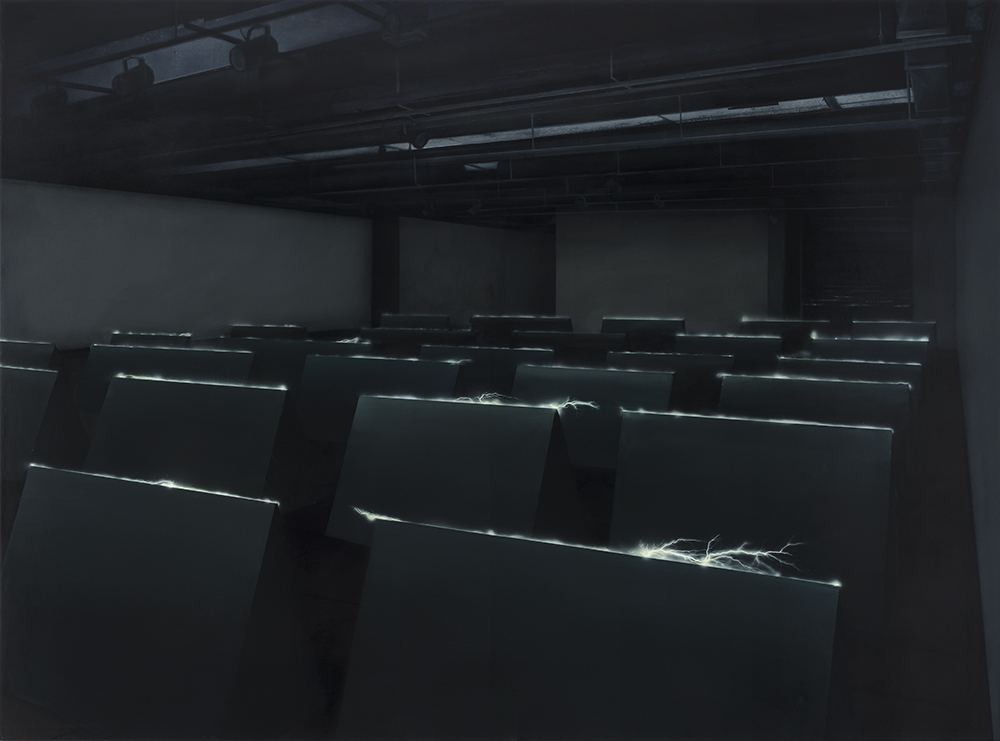
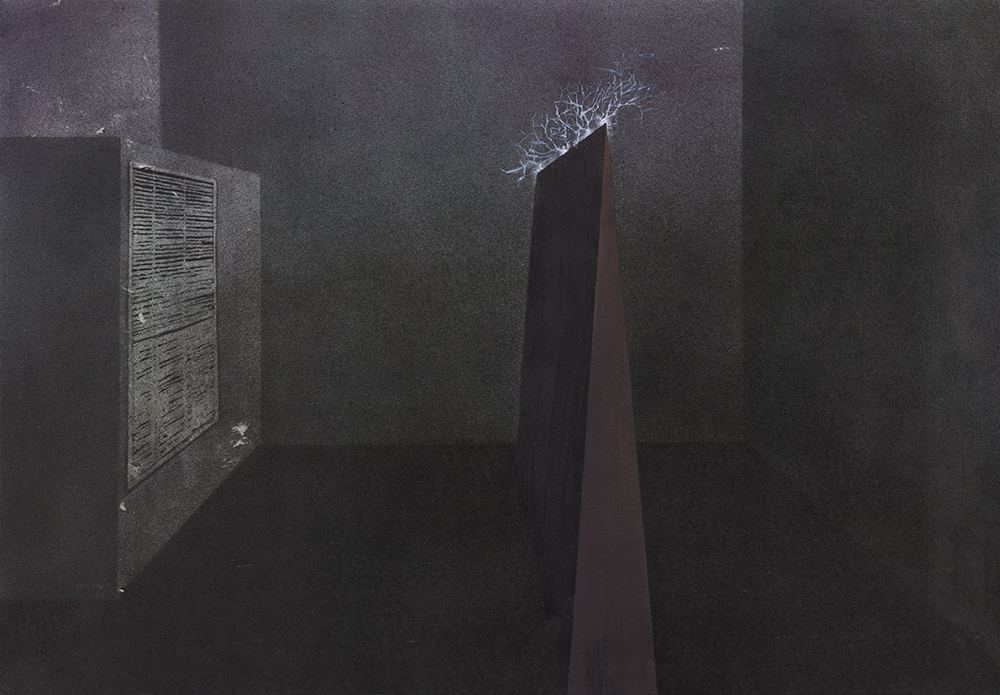
St. Elmo’s Fire
St. Elmo’s Fire, also called St. Bartholomew’s Fire or the fires of Castor and Pollux, is an acousto-optic phenomenon in the form of electric shocks on different surfaces such as rocks, trees, and the aerials and masts of ships. It appears du- ring weather promising a storm, and is accompanied by very quiet sounds like hissing or whistling. St. Elmo’s Fire occurs in different places, but it is easiest to see it in the mountains or at sea.
From: WikiPedia (23.04.2013)
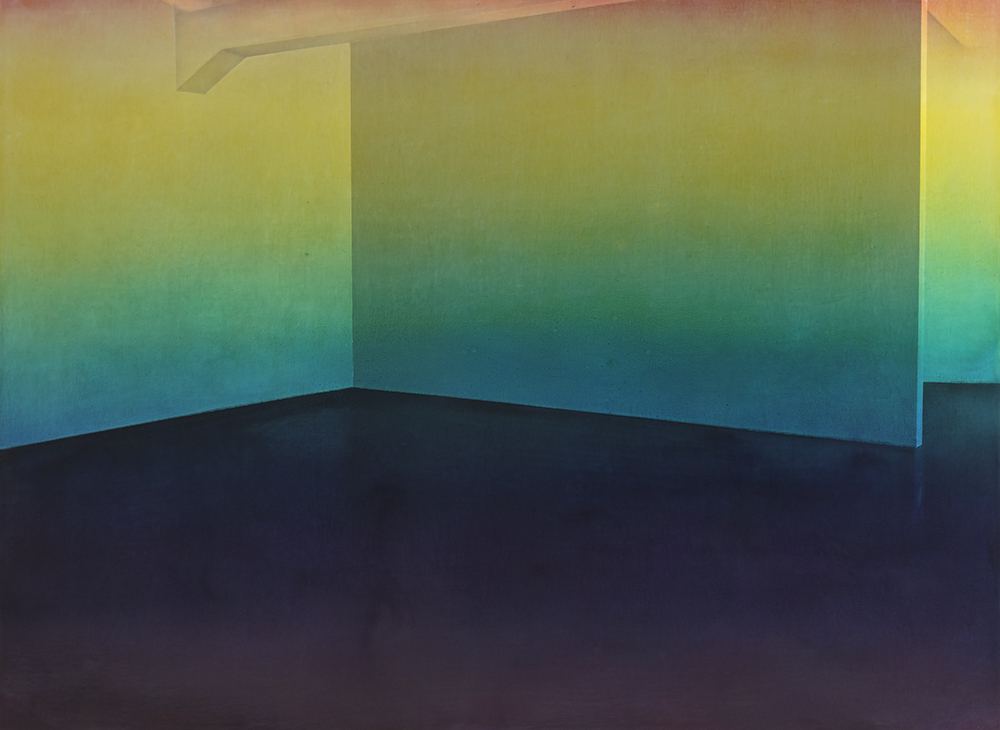
Artificial aurora, Artificial rainbow
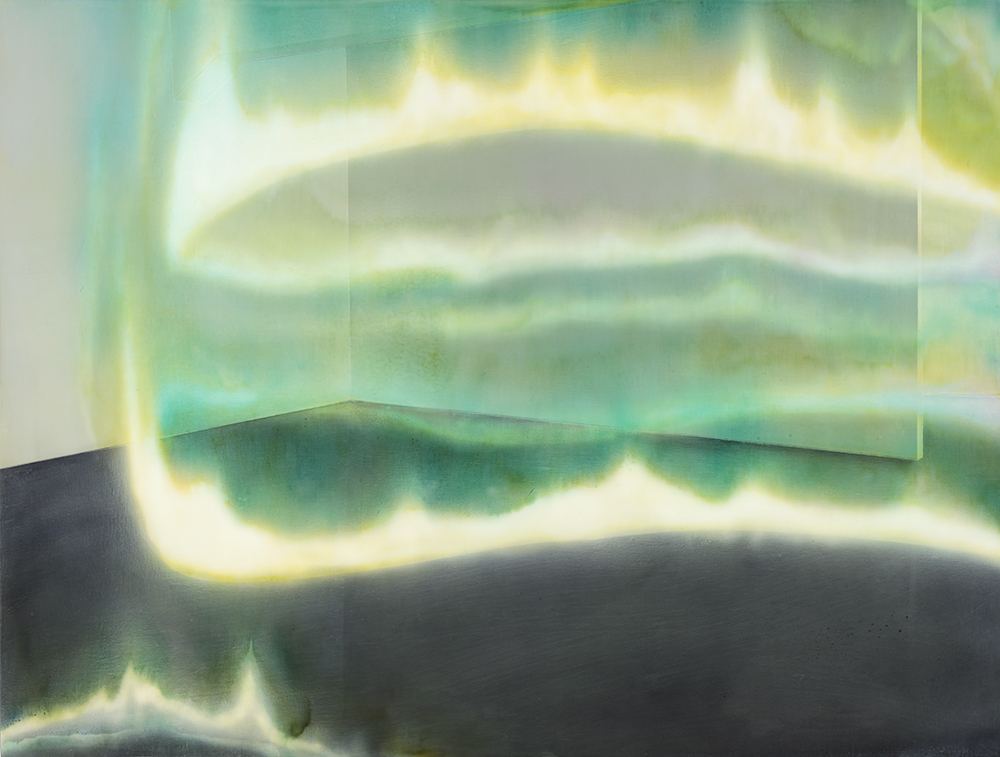
My interest in science and natural phenomena has always been strongly reflected in my artistic work. Particularly fascinating were creating the rainbow and the aurora borealis in artificial conditions. However, I never, beyond mere aesthetic curiosity, had sufficient motivation to achieve them, so I decided to put them in the gallery using an image.
Two anecdotes are linked with these works: during the painting of Artificial Aurora I learned that, at the same time, the phenomenon could be observed over Poland. But, when I was painting Artificial Rainbow, I heard on the radio that someone had already had the idea to put it in a gallery. For me, these two works should be viewed like a sunset on the beach – without the need for additional contexts.
Dust
A few years ago the Octopus group, which I belonged to, realized an idea by one of its members, Michał Gayer, for an installation called Dust. In one room, at the BWA Gallery in Tarnów, they sprayed dust, or in fact the residue after treating cardboard – a very light powder that imitated it. This project became my inspiration when I was working on an image that I created for the exhibition Milk Teeth at the BWA Gallery in Katowice. I decided to paint the whole exposition before it was complete.
I did not take into account the fact that the changes made by the curator and the artists themselves would make it difficult for me to paint the exhibition before the vernissage. Thus I came to the conclusion that the creation of this image following the concept that I had come up with was just as impossible as filling the entire exhibition with dust.